We spent Wednesday evening at a lovely hotel in Rzeszów, an even lovelier town.
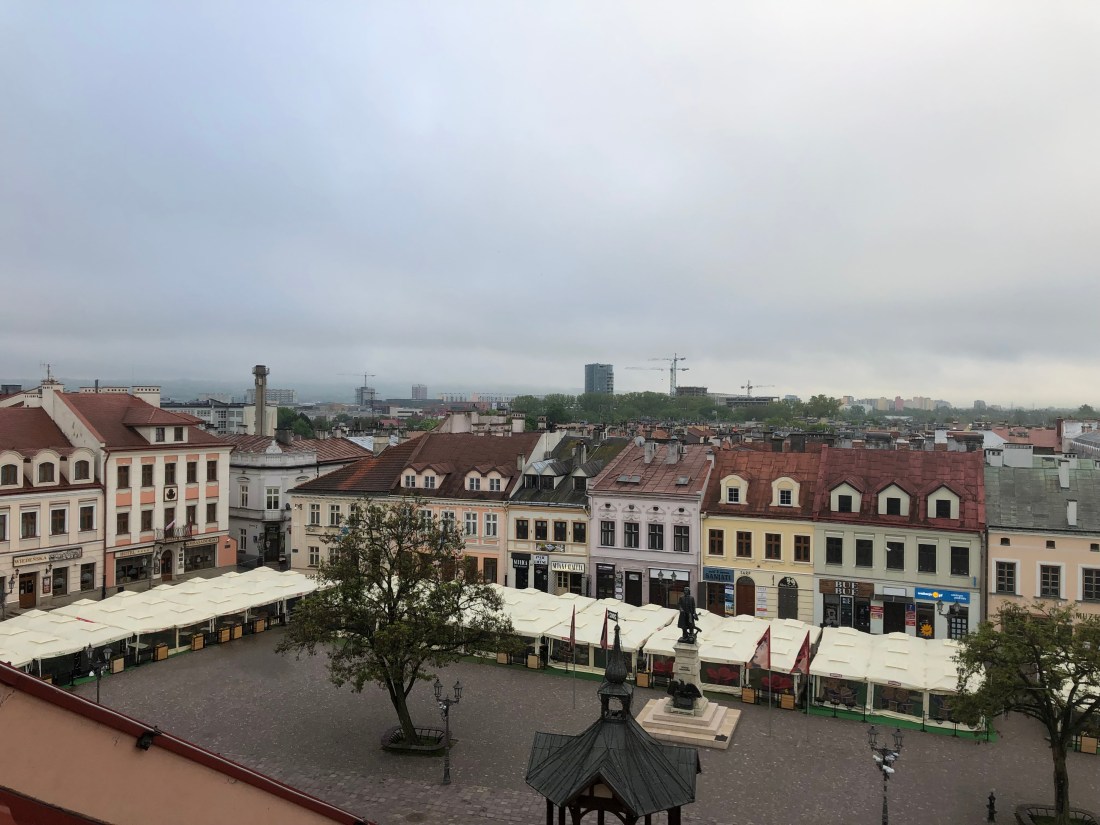
May 2019
We spent Wednesday evening at a lovely hotel in Rzeszów, an even lovelier town.
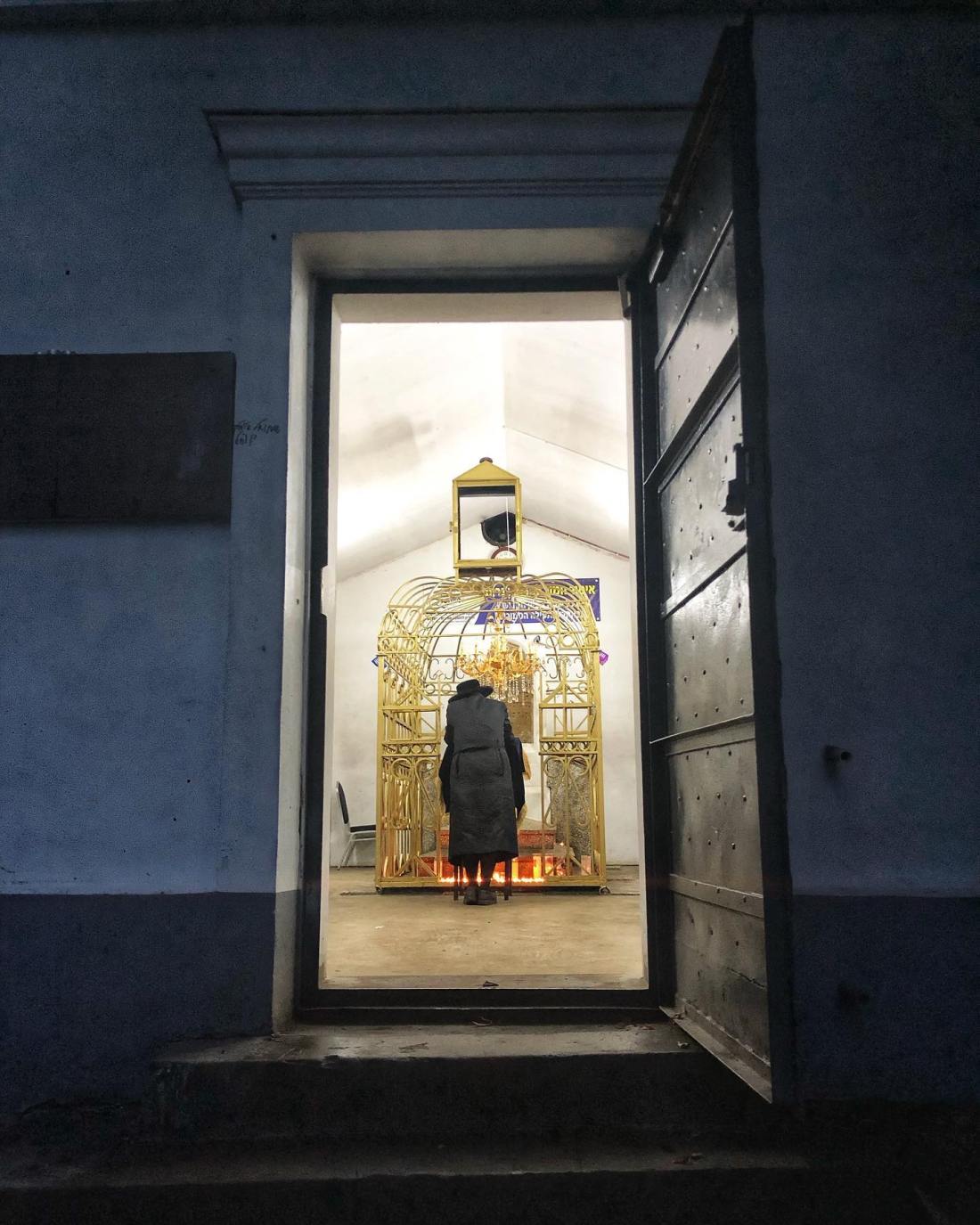
This is one of the most powerful musical moments I’ve ever experienced.
What I was hoping for was a quiet moment at the Kever of R’ Elimelech of Lejansk, to sing his words to the famous melody composed by Yossi Green. There was a single Chossid Davening there and I hoped I wouldn’t disturb him with my singing.
I began to sing, and the Chossid joined along with me – me with my guitar and him with his soul.
Who is this Chossid? He’s every one of us. Every single one of us.
One day melds into the next
There is a disquieting silence everywhere
Greenery is emerald drinking the souls that vanished
The rain contributes to all the growth
Eerie faces of natives most with blond hair and blue eyes going about their daily lives
What was their pedigree?
Were they helpers or did they hinder?
The machines that remain can be turned on in a flash
Yes it happened, too many people testified!!
Seventy years later the world is calling us out again
This time calling it
Anti Zionism
My heart hurts for those that were tortured and died here and some just
Never learned…
-Robyn Blumner
May 15, 2019
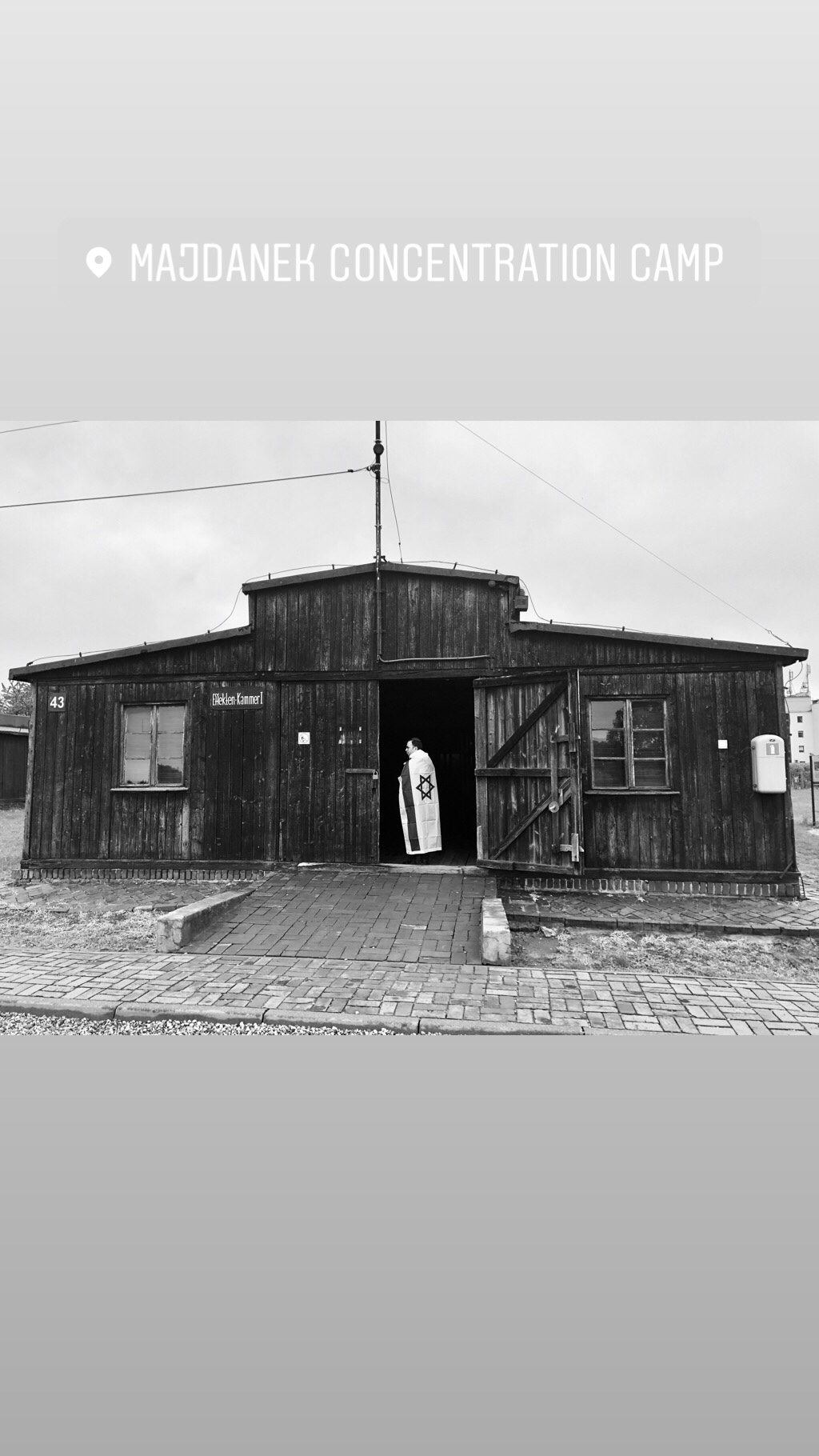
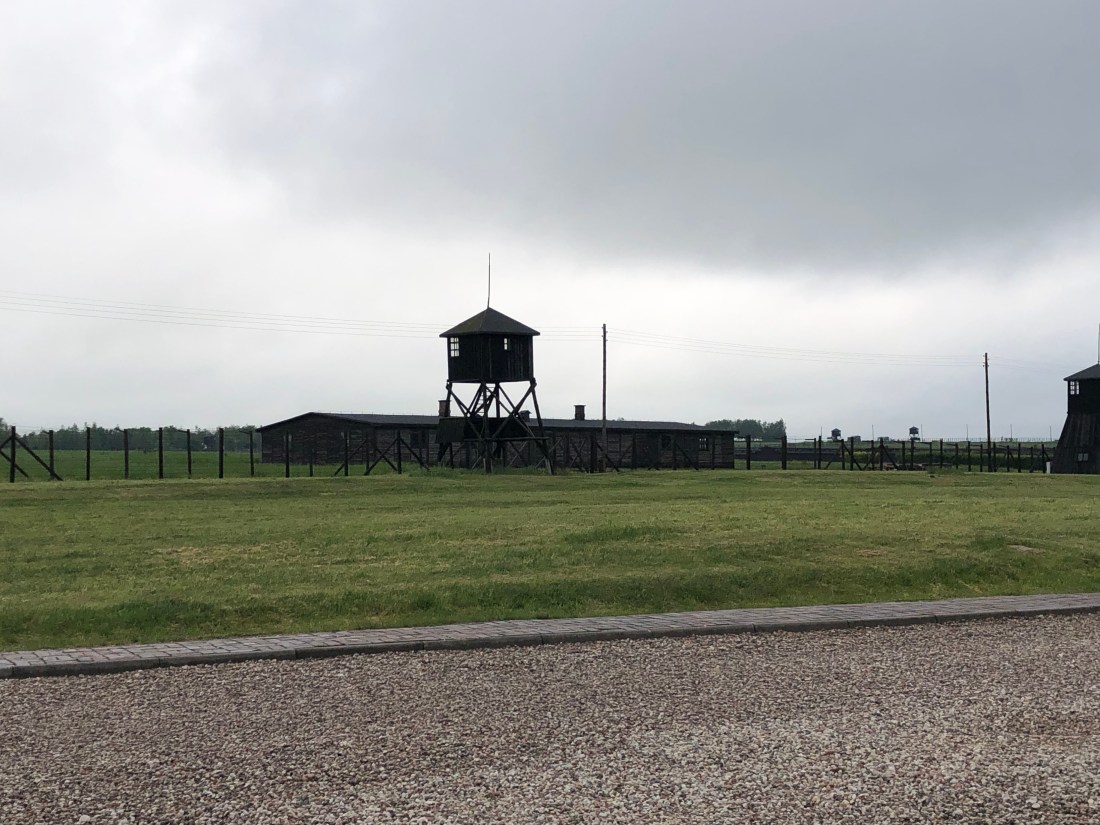
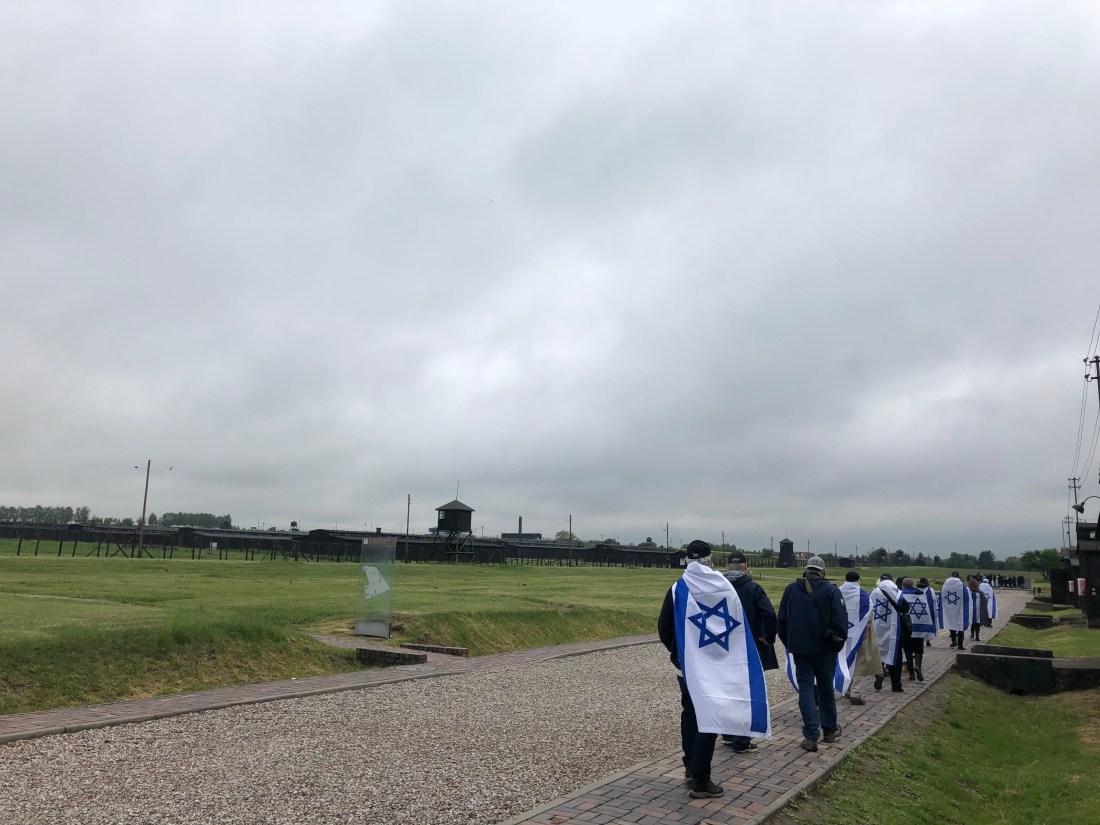
I’ve stood in many special places. I’ve hiked up mountains to stand on summits. I’ve stood in Notre Dame to see the pinnacle of medieval architecture. I’ve walked the streets of the old city in Jerusalem, pressed my head against the Kotel and felt the presence of Hashem. Today, I walked through the Majdanek concentration camp.
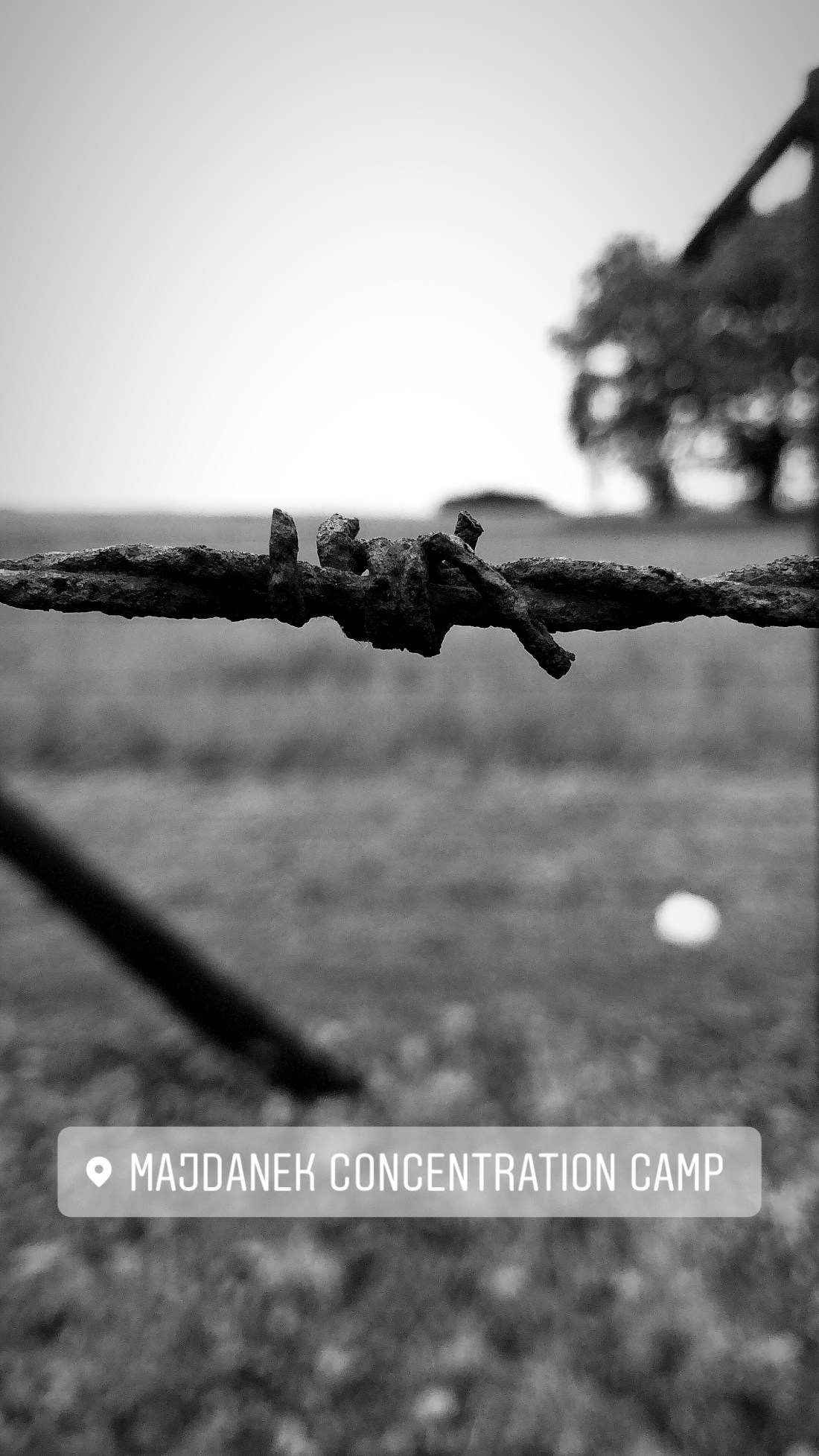
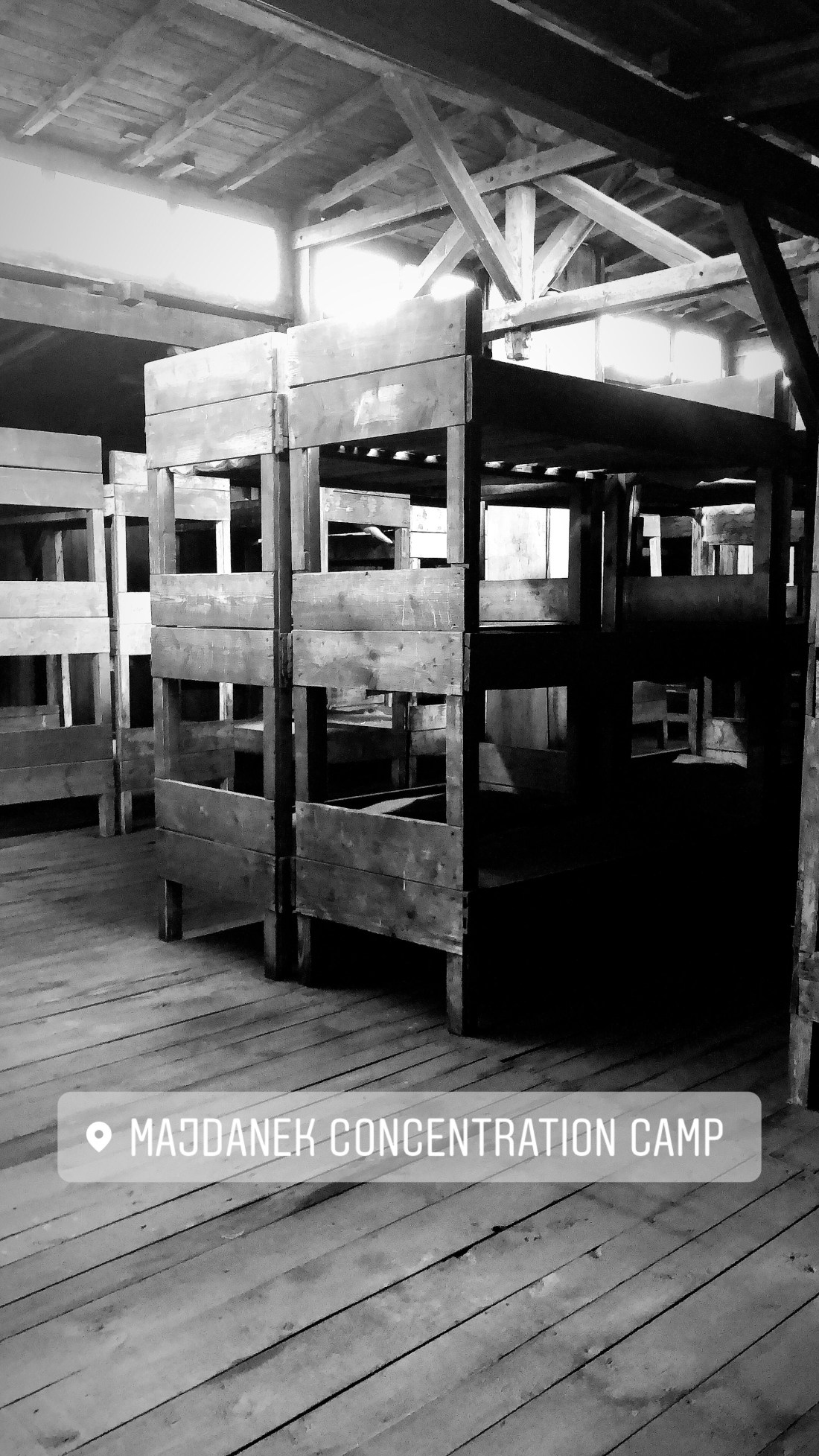
Majdanek is not a monument in stone like Treblinka. Majdanek still has the gas chambers where my people were killed and the barracks where tens of thousands dwelled in squalor. Majdanek is where the foundation for the road is crushed headstones from Jewish cemeteries. It is the crematorium where the gassed bodies were burned and the mass grave of 18,400 Jews who were shot in a single day.
Today I walked the paths of a concentration camp. I stood where mothers refused to be separated from their children. I was barely able to stand in front of 400,000 pairs of shoes. Then, standing under a mausoleum, in front of the ashes of the victims, I said Kaddish and cried.

Rabbi Polakoff delivers a Shiur on Daf Yomi in Yeshivas Chachmei Lublin.
The steel gray clouds feel lower here. There is an eerie quiet broken by the crunching of gravel beneath our shoes. We are waking between horizontal slabs of stone marking the old railroad tracks and a white ribbon, winding through the trees, marked with the names of Treblinka’s victims. Nothing of the camp remains standing. Now there are just monuments and trees.
The silence is fitting. This place deserves to be still now. The camp was in operation for 13 months. In those 13 months 900,000 people were killed. 67 escaped. It is impossible to understand how anyone was able to avoid being killed. Jews were taken from the train, stripped of their possessions and marched into the gas chamber. There were no barracks, no beds, no cells. People were brought here to be turned into corpses.
In a single day up to 17,000 people would be killed. This number is remembered by fragmented stones that sit on top of concrete covered mass graves. These stones have the names of villages and towns that no longer exist. Among the countless names of places, one person is memorialized, Janus Korczak.
Korczak ran the orphanage in the Warsaw Ghetto. When his children were selected to be sent to Treblinka, Korczak was given a pass. He, however refused to abandon his children. He accompanied them from the ghetto, onto the train and all the way to the end. The weight of that decision lies heavy around us. Hearing just this one story is heartbreaking. Waking away there are 899,999 stories that we will never know.
5-14-19
I did not prepare for this trip on an emotional respect nor did I research the history or do any reading recently. Of course, we learned much of the history as students years ago and continue to share the pain of survivors throughout the engagements over the year, on Yom Hashoa, and have read stories about the terrors of the Holocaust, but it’s not the same.
Today we traveled to Warsaw Poland. Our first stop was a Jewish cemetery. We were impressed to see so many ornate tomb stones that were uniquely designed by each family or perhaps even by the descendants based on their status, profession, spiritual belief and sometimes even their ages (for instance, the tree trunks cut half way were for people who passed away at a young age). I had never seen anything like these tombstones. The colors, stones, sizes, designs and shapes were all different (for instance, a stone with a snake depicted a doctor’s tomb. We even entered the ohel (tent) of the Netziv’s tombstone where his granddaughter’s husband, Reb Chaim Soleveitchik was buried next to him.
Next we visited the Warsaw Ghetto. The ghetto was inhabited by the jews for approximately three years. Approximately 300,000 jews lived in Warsaw (1/3 of the population) and they were only given about two percent of the city of Warsaw’s land space to inhabit about 400,000 people (about a one mile radius). The jews were given rations of less than 200 calories per day, and the gentiles were given approximately 800 calories per day. On the property of the Jewish museum (closed on Tuesdays) there was a huge monument built with the stone owned by Hitler. On the back of the monument, there is a depiction of a line of jews going towards the gas chambers. there is a young child looking out and a religious man holding a Torah, looking up to the sky and praying to G-d. The tour guide, Rabbi David Abrahamovitz referred to two parts of the davening in the siddur (in Tachanun and somewhere else) where it says that we are like sheep walking sheepishly to our death, but he refuted this and discussed how the chief Ashkenazi Rabbi Lau’s father courageously took two congregations in to the camps with pride.
Then we went to the Umshlagplatz in the Warsaw Ghetto which was walled in and was where the jews convened to take the trains to the camps. The starving jews were told that if they come to this meeting point, they will receive bread and jam. We were shown photos of the jews in the same walled in area eating the bread, so they did get the food. It’s uncertain whether they realized where they were being taken.
Then we travelled about an hour and a half to Treblinka. There are three of these death chambers. There was nothing remaining here except for 17,000 stones with the names of different cities and only one individual. The one man, owned an orphanage, and he courageously accompanied his “children” to the camps and would not abandon them, even though he was given a pass and could have possibly saved his own life. At this location, there were no barracks. The map of the area as it was, showed that the jews had to walk around a bend so they were unable to see where they were going to. All the evidence was basically destroyed but the tour guide was able to show us pieces of bones found on the ground.
Apparently, pieces of tiles with jewish stars have been found here. We were told that the mikvehs in Warsaw had jewish stars on the tiles of the walls. The death camp was built with similar tile for the jews to believe they were being taken into a cleansing bath.
Surprisingly, the sign to Treblinka even today shows a cross but there is no jewish star. Do the Polish people deny the fact that so many jews were killed in their country? What are they teaching their children?? This is very concerning.
We were told that the jews were told to take their clothing off and leave their luggage in a certain area. They were given metal bracelets with a number in exchange for their valuables. (They were told to put their valuables separately and thought they were leaving it a personal locker type of spot for safe keeping.)
We drove back to Warsaw for dinner, davening, and sleep. The weather today was cold and gloomy. It rained a bit but we didn’t get too wet. The tour guide is very knowledgeable, I should have paid better attention or videotaped his presentations, as my memory is seriously lacking.
B”H, we are so blessed to have religious freedom, to have options, to be able to travel, to have the state of Israel, to have healthy children and grandchildren, to be healthy, to be married, … to have Hashem guide us to have clarity to make the best decisions.
Debbie Chadow
May 14, 2019
A Rabbi, a Chazzan, and a President walk into a Shul…
Here we are just after Shacharis at the Nozyk Synagogue. It’s the only remaining pre-war synagogue in Warsaw from over 400.

 Journey to Poland