We Thought We Would

We thought we would, but we didn’t

Any Jewish trip to Poland consists of a trip to the Concentration Camps. The worst of which is Birkenau, a unimaginably humongous death camp where 1 million Jewish people were murdered. As the trip was approaching, I think we were all worried and anxious that it would be too intense, that we would cry, that we would be depressed. We didn’t cry and we weren’t depressed.

This time in history is undoubtedly the most horrific period in Jewish history and in all humanity. We saw and we felt what it was like to be helpless, weak, beaten and humiliated. When walking through the barricks, we found shards of human bones which is common in these camps. 

Why did we not cry? I believe its because we didn’t feel weak.We draped ourselves with the Magen David and we knew that we were strong. We didn’t cry because there was nothing to cry for anymore. Am Yisroel Chai.

-Erran Kagan

May 19, 2019

Hamavdil – by Robyn Blumner

Peace descended upon the visuals of destruction , stench and horrors of war

Thoughts settled in all of our minds in various constructs

A type of separation ensued replaced with chat, song and prayer

Walking, nourishments of all kinds and beautiful sights

Hope renewed hearing from a person who hid us from the horrors

Feeling life through uplifting music and song, we are here and are never leaving…

-Robyn Blumner

May 18, 2019

Leaving Auschwitz

Leaving Auschwitz with the Israeli flag draped over our shoulders we proudly proclaim, “We are still here!” It is a rare occasion when one does not mind pointing, staring or whispering when you walk by. All week in Poland, we’ve demonstrated and practiced our Judaism in ways that are tremendous.

One of Judiasim’s tenants is tikkun olam, repairing the world. We accomplish this by taking our normal activities and doing them in a way that reveals a higher divine meaning. It is easy at home to go to a beautiful shul, wear a kippah on the street or eat a kosher meal. In Poland each of these acts takes on a special, extra meaning. Our very presence here is a source of light and hope.

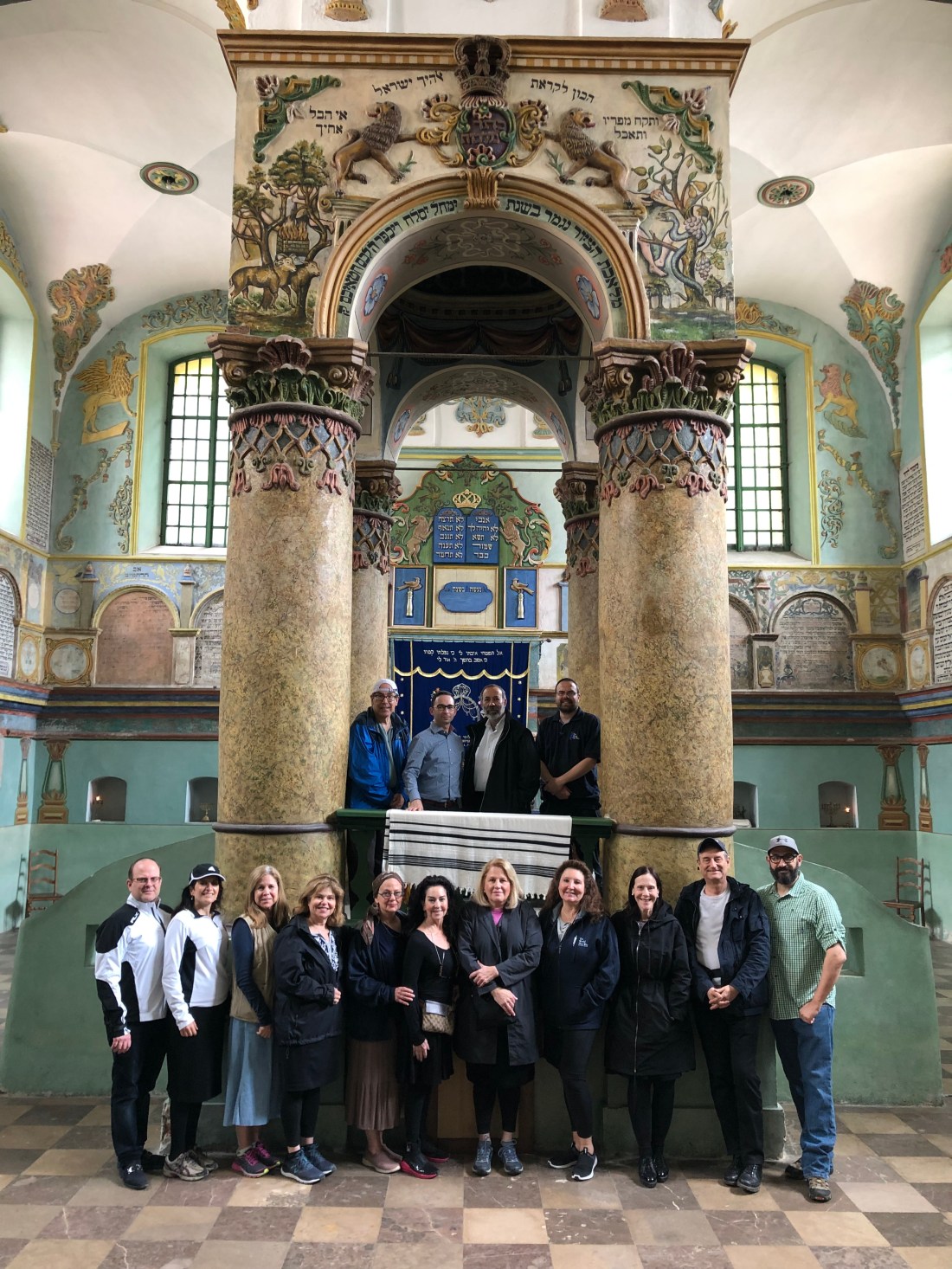
Each time we daven we are fighting back against the harm done to Jews. Our group has brought prayer to shuls in Poland that had not heard Maariv in over 70 years. We have sung beautiful songs together, not only in sadness in front of the graves of children, but in celebration before the resting places of great Rebbes. We lained in Krakow, then danced in the streets singing nigguns. All of this tells the world that though the Holocaust was incredibly harmful, ultimately it was a failure.

The Children’s Forest

I’m getting tired of washing my hands. I understand why we wash after visiting a gravesite. I wish we did not have to do it today.

There is a mass grave in the forest outside Tarnow that should not exist. Mass graves are unfortunately common in Poland. This one is different. Eight hundred children are buried here. Eight hundred children beaten to death, at night, in the forest. The forest at night is already a frightening place for a child. Thinking of them, separated from their parents, marched in to the woods by strange men and savagely killed should only exist in a person’s nightmares.

A blue metal fence with widely spaced pickets surrounds the site. Piles of burnt out candles and faded flowers line the perimeter. The top of the stone memorial is covered in colorful clay statues. Little toys with which little hands can no longer play.

The sense of loss here resonates with such strength that it’s overwhelming. It’s physically difficult to walk up to that fence. Then, when it’s time to leave, my feet are rooted to the ground. I’m a father who loves his children more than anything else. That emotion pours from me for the children lying here. While they cannot physically leave this forest in Poland their souls will be traveling me with for ages yet to come.